Regenerative endodontic procedures in immature permanent teeth are often discussed in terms of apical healing, resolution of symptoms, and the possibility of continued root maturation. Yet a tooth can appear to have responded biologically and still present challenges for the patient and the clinician. Esthetics, intracanal changes, coronal restorability, and long-term structural survival are not secondary concerns; they are part of the outcome.
An important retrospective cohort reported in the October 2026 issue of the Journal of Endodontics helps broaden this discussion. Osiri and colleagues evaluated 120 immature permanent teeth treated with regenerative endodontic procedures at Mahidol University between 2006 and 2023. Median follow-up was 30.5 months, although the duration varied considerably among cases.
What the cohort found
Discoloration was recorded in 37 of the 61 teeth with available color data (60.7%). That denominator is important: the finding should not be presented as an estimate of discoloration for all 120 treated teeth. The investigators found an association between the use of mineral trioxide aggregate and discoloration relative to Biodentine, but the observational design cannot establish that the material alone caused the difference.
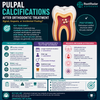
Partial intracanal calcification was found in 60 of 120 teeth (50.0%); complete canal obliteration was not identified. EDTA use at the bleeding-induction visit was associated with calcification, but association must not be equated with causation. Differences in clinical protocols, treatment eras, and patient factors may contribute.
Thirteen teeth (10.8%) were placed in the study's disease category. Importantly, these cases did not represent a single biological failure mechanism: the reported reasons included persistent infection, fracture, coronal leakage, subsequent trauma, parafunctional force, and an unidentified cause. This distinction matters when interpreting any composite outcome.
A restoration is part of the biology's long-term success
The report also described three fatal crown-root fractures in which the position of the coronal barrier appeared to limit the depth available for a bonded composite restoration. This is an observation from a small number of cases, not proof of a particular causal mechanism. Nevertheless, it raises a clinically consequential question: can a regenerative protocol be called successful if the remaining coronal tooth structure is inadequately protected?
Regeneration does not remove the need for conventional restorative judgment. Barrier positioning, available coronal tooth structure, adhesive strategy, occlusal considerations, and follow-up all remain relevant to tooth preservation. An encouraging radiograph is only one part of that assessment.
What the evidence does—and does not—support
The study is valuable because it brings less-discussed outcomes into view. However, it was retrospective, included treatments delivered across many years, and had incomplete color data. It does not establish that one irrigant or one calcium-silicate material will necessarily produce a superior long-term clinical outcome in a different patient population.
Nor should partial intracanal calcification automatically be interpreted as treatment failure. Its significance depends on the clinical context, its progression, and whether subsequent treatment becomes necessary. The important advance is to record these findings systematically, counsel patients realistically, and study the relationships prospectively.
Radar Insight
Regenerative endodontic success must be multidimensional. Periapical healing is essential, but it does not fully describe the patient's outcome. Discoloration, intracanal calcification, coronal integrity, future treatment options, and tooth survival deserve explicit attention in informed consent, restorative planning, and long-term follow-up. The goal is not merely to heal an image; it is to preserve a functional, restorable tooth.
Attribution
This original RootRadar Espresso commentary interprets Osiri S, Theekakul C, Banomyong D, and Jantarat J. “Mahidol Study 3: Postoperative Effect and Adverse Events of Regenerative Endodontic Procedures in Immature Permanent Teeth.” Journal of Endodontics. 2026;52(10):1613–1623. DOI: 10.1016/j.joen.2026.06.010. The interpretation and clinical perspective above are RootRadar's, not claims of causal proof by the investigators.
☕ RootRadar Espresso — Your regular shot of dental insight.